
How to Choose a Wedding DJ Booth Setup That Fits Your Columbus Reception
By Christopher “DJ iShine” Summers · iShine Music Production
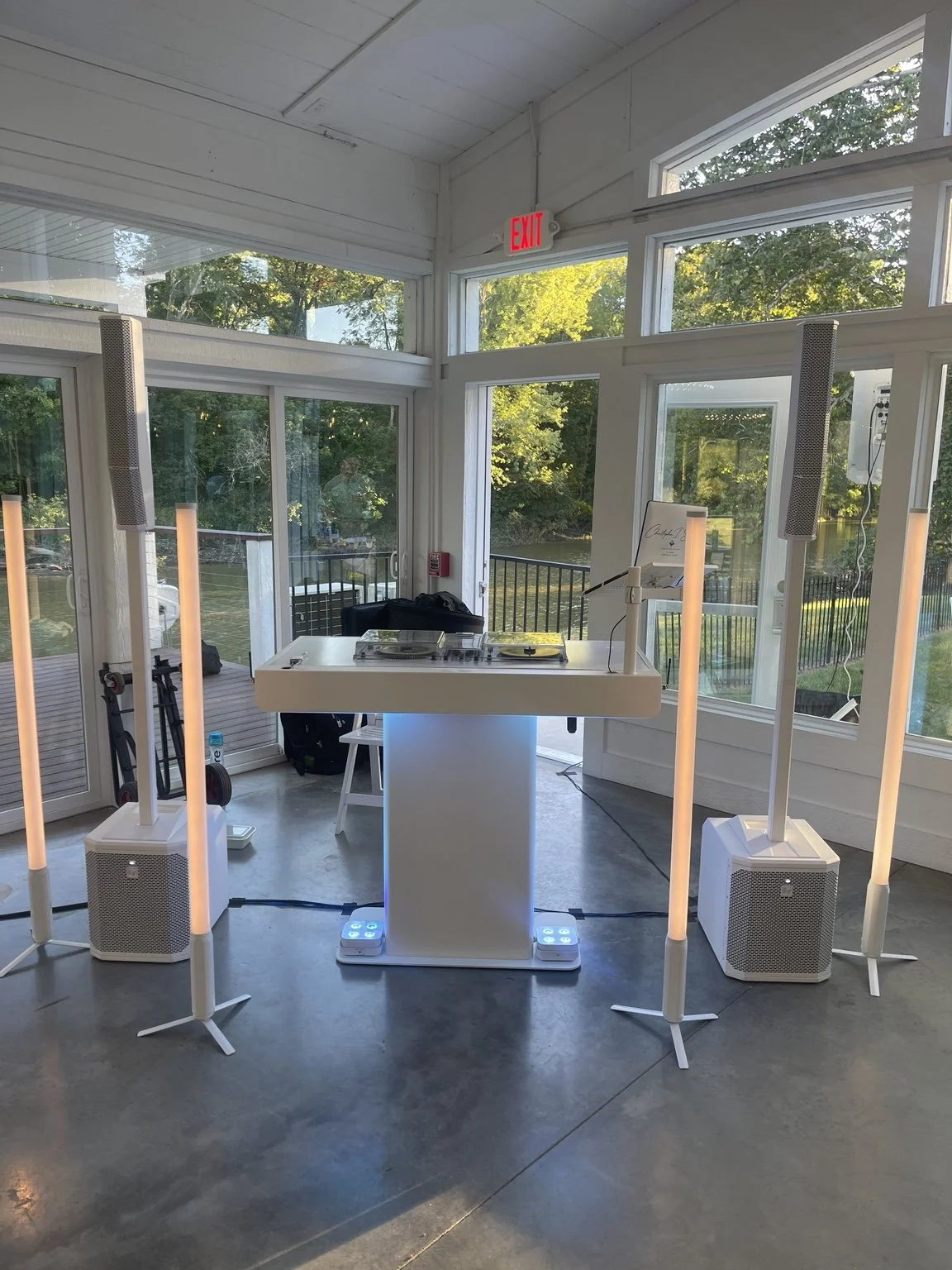
A DJ booth is part of the room your guests will see all night. If you care about how it fits your Columbus reception, ask to see photographs of the full setup in use. Look for the booth, speakers, stands, lighting, and cables, then talk about how the proposed arrangement would work with your floor plan.
A booth that looks good in a close-up may feel different in a ballroom, tent, or room with a ceremony flip. The useful question is how your DJ’s actual work area will look from several parts of your event. That includes the place guests view introductions, the photographer’s first dance angle, and the space staff need to pass through with food and equipment.
Ask for photos that show the whole room
A few wide photos are useful. Ask for a view similar to your room or guest count if the DJ has one. Look for the relationship between the booth and the dance floor, which speakers are visible, and where lights are placed. A photo taken before the event can show how the setup looks in normal light. A photo during dancing can show how it reads after the lighting changes.
Ask which pieces shown would be included in your quote. A picture of a large production may feature optional equipment or venue lighting. A smaller example may show fewer pieces because the room did not need more. The photo helps you ask questions, while the written proposal tells you what to expect on the day.
Choose a look that works with your design
Tell your DJ about your reception style and the colors that matter. A clean white booth might fit a bright room with soft draping. A darker setup might blend with a stage or backdrop. Some couples prefer a neutral booth without prominent signage, while others like the look of an open setup that lets guests see the DJ mixing. Ask what options the vendor actually offers.
Give the planner and decorator the same information. A floral arrangement that looks right in a sketch may crowd a speaker or block the DJ’s sightline. The vendor can explain what parts of the setup need to stay open and accessible. Agree on what decor can go near the booth and who will place it.
Check the view from guest seats
Look at the layout as a guest arriving, a person assigned to the nearest table, and someone watching the first dance. Ask if the booth can be placed so it supports the flow of the room and leaves a clear view of key moments. A spot can appear centered in an empty floor plan while the occupied room sends guests around tables and service paths.
The DJ may also need to see the planner, the people making entrances, or the venue operator. If the booth will be around a corner or behind a display, ask how the team will send cues. You can often adjust the visuals while preserving safe paths, workable sound placement, and a clear performance area. Review your DJ placement on the wedding floor plan.
Include speakers, lighting, and power in the conversation
The booth surface is one piece of the setup. Ask where speakers go, whether lighting uses separate stands, and how the audio team plans around venue power and access. Tell the venue if the floor plan changed so its staff can confirm the working area and approved cable path. Let the professionals choose the equipment based on how the room needs to sound.
Also ask about the visual effect of the lights you may be adding. Room uplighting can create a backdrop, and dance lighting can influence the appearance of guests and the booth after dinner. Ask for examples and discuss the settings you want during toasts, the first dance, and open dancing. Consider whether uplighting fits your reception.
Talk about attire and signage directly
If you have a dress code, tell the DJ before the wedding. The performer can confirm what attire is appropriate for the room, load-in, and performance. A vendor may change after setting up. If the event has a specific color or formality requirement for vendors who appear in photographs, check whether they can accommodate it.
Ask about signs or branding if it matters to you. Photographs of the booth help you check how prominent any label is. Your DJ can tell you what is part of the setup and what can be adjusted. Ask early if you also want to avoid a projector graphic, screen logo, or similar visual that might be under someone else’s control.

Plan around the photographer’s important angles
Share the reception layout with your photographer and DJ. Ask what will be in the background during the entrance, first dance, and toasts. A speaker stand visible in a photo might be a minor issue, while a booth that blocks a doorway or moves a facing angle could affect the photograph and event flow. The teams can discuss which options fit the room.
If the couple wants a particular backdrop, show it to the DJ and planner before the furniture is finalized. They can check whether a microphone handoff would require the speaker to move or whether guests will be able to see. A small adjustment made in planning can protect the lighting, sound, and pictures together. Coordinate DJ cues and camera placement for the first dance.
Confirm the setup in writing before load-in
Ask for the footprint and any needed tables, linens, or equipment area to appear in the venue instructions. Confirm who provides those items and what time the DJ can begin setup. Mark where the booth and speakers go on a shared drawing with the planner. If the venue plans a room flip, include when the area becomes available.
Notify the DJ if the floor plan changes near the wedding. The position affects power access, working space, sound, and sightlines. A quick review makes it possible to agree on a workable adjustment before vendors arrive. The actual room may require the team to refine the finished plan during setup. Plan wedding DJ access and setup time.
A hypothetical Columbus reception design review
Imagine a couple planning a reception with pale linens, candlelight, and an arch they want visible behind the first dance. They ask the DJ for two wide setup photos and share the proposed layout. Their planner and photo team confirm an angle that keeps the arch visible. The DJ explains where the speakers and booth need to be for sound and timing.
The venue approves the equipment area and guest paths, and the couple chooses a lighting look that suits the room. The DJ can arrive with the proposed setup, and the planner knows who will handle any change. The finished view depends on that coordination as much as the shape of the booth.
What to review with a DJ before you decide
- Wide photos of the full setup, including equipment and lighting.
- Which items, style, and footprint are included for your date.
- The booth position, guest paths, and photographer’s main angles.
- The actual person’s performance attire and any visible signage.
- Venue access, power, and the time the room needs to be ready.
I’m Christopher “DJ iShine” Summers. My wedding experiences use an open performance setup, with sound and lighting planned around the event. Share your venue and the look you have in mind so we can talk through how it would work in your Columbus reception. See iShine’s wedding DJ and MC experiences.